Google Pixel 7 vs Google Pixel 9 Pro Fold
Our Verdict: There's two years between the Pixel 7 and the Pixel 9 Pro Fold, so the Pixel 9 Pro Fold is ahead on most things. The 7 has a slightly higher-resolution main camera, 50MP against the 9 Pro Fold's 48MP, and the 9 Pro Fold has the bigger screen at 8" against 6.3", while the 7 has the sharper one at 418 PPI. Storage goes higher on the 9 Pro Fold, up to 512GB against 256GB, and the 7 is the lighter phone at 195g against 257g. If you're on the 7, the 9 Pro Fold is a real step up, but only worth it if the changes above matter to you.
15 reviews 4.2
13 reviews
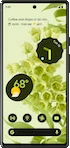 Google Pixel 7 |
 Google Pixel 9 Pro Fold |
|
|---|---|---|
| Release Date | 13 October 2022 | 4 September 2024 |
| Expert Rating |
4.3 15 reviews |
4.2 13 reviews |
| Screen | 6.3" | 8" |
| Display | AMOLED | Foldable LTPO AMOLED |
| Resolution | 1080 x 2400 | 2076 x 2152 |
| Pixels Per Inch | 418 | 374 |
| Rear Camera | 50 Megapixels | 48 Megapixels |
| Front Camera | 10.8 Megapixels | 10 Megapixels |
| Chipset | Google Tensor G2 (4 nm) | Google Tensor G4 (4nm) |
| Battery | 4,355 mAh | 4,650 mAh |
| Storage | 128GB, 256GB | 256GB, 512GB |
| OS | Android | Android 14 |
| SIM Type | nano-SIM and e-SIM | nano-SIM and e-SIM |
| Connectivity | Up to 5G | Up to 5G |
| Wi-Fi | 802.11 a/b/g/n/ac/6e | 802.11 a/b/g/n/ac/6e/7 |
| Bluetooth | 5.2 with A2DP, LE, aptX HD | 5.3, A2DP, LE, aptX |
| Dimensions | 155.64 x 73.16 x 8.7 mm | 155.2 x 150.2 x 5.1 mm |
| Weight | 195 grams | 257 grams |
| Water Resistance | IP68 - Dust and water resistant over 1.5 meter and 30 minutes | IPX8 - water resistant (up to 1.5m for 30 mins) |
| Deals | Deals |
Compare with AI
Ask ChatGPT or Claude to weigh up the Google Pixel 7 and Google Pixel 9 Pro Fold for you, from our full specs, expert review scores and live UK deals. Try asking: “Which has the better camera and battery life, the Google Pixel 7 or the Google Pixel 9 Pro Fold?”
Related Comparisons
Frequently Asked Questions
Which has the better screen, the Google Pixel 7 or Google Pixel 9 Pro Fold?
The Google Pixel 9 Pro Fold has the bigger screen at 8" compared to the Google Pixel 7's 6.3", the Google Pixel 7 has the sharper display at 418 pixels per inch versus 374, and the Google Pixel 7 uses a AMOLED panel while the Google Pixel 9 Pro Fold has a Foldable LTPO AMOLED.
Which has the better camera, the Google Pixel 7 or Google Pixel 9 Pro Fold?
The Google Pixel 7 features a 50 Megapixels rear camera, while the Google Pixel 9 Pro Fold has a 48 Megapixels rear camera. Both devices also have front-facing cameras for selfies and video calls.
What storage options are available for the Google Pixel 7 and Google Pixel 9 Pro Fold?
The Google Pixel 7 is available in 128GB, 256GB, while the Google Pixel 9 Pro Fold comes in 256GB, 512GB.
What processors do the Google Pixel 7 and Google Pixel 9 Pro Fold use?
The Google Pixel 7 is powered by the Google Tensor G2 (4 nm), while the Google Pixel 9 Pro Fold uses the Google Tensor G4 (4nm).
Which is easier to carry and hold, the Google Pixel 7 or Google Pixel 9 Pro Fold?
The Google Pixel 7 is the more portable of the two: it's 62g lighter at 195 grams, it's also the more compact phone at 155.64 x 73.16 x 8.7 mm, the Google Pixel 9 Pro Fold is slimmer at 5.1mm thick.
Which is more water resistant, the Google Pixel 7 or Google Pixel 9 Pro Fold?
The Google Pixel 7 is rated IP68 - Dust and water resistant over 1.5 meter and 30 minutes, while the Google Pixel 9 Pro Fold is rated IPX8 - water resistant (up to 1.5m for 30 mins).
What operating system do the Google Pixel 7 and Google Pixel 9 Pro Fold run?
The Google Pixel 7 runs Android and the Google Pixel 9 Pro Fold runs Android 14. This is one of the biggest factors when choosing between the two, as each ecosystem has its own apps, services and features.