Apple iPhone 15 vs Samsung Galaxy A56 Enterprise Edition
Our Verdict: The Samsung Galaxy A56 Enterprise Edition has the better camera on paper, 50MP versus 48MP, and the A56 Enterprise Edition has the bigger battery of the two, 5000mAh against 3349mAh, but capacity doesn't compare cleanly across iOS and Android, so it isn't a battery-life verdict on its own. The A56 Enterprise Edition has the bigger screen at 6.7" against 6.1", while the Apple iPhone 15 has the sharper one at 461 PPI, and storage goes higher on the iPhone 15 5G, up to 512GB against 128GB. The iPhone 15 5G is the one to have if you want what it adds, but the A56 Enterprise Edition is the smarter buy if you'd rather keep the money.
Buying outright, the A56 Enterprise Edition starts at £299 SIM-free.
Prices updated 18 July 2026
 Apple iPhone 15
|
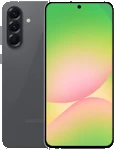 Samsung Galaxy A56 Enterprise Edition
|
|
|---|---|---|
| Screen | 6.1" | 6.7" |
| Display | Super Retina XDR OLED | Super AMOLED |
| Resolution | 1179 x 2556 | 1080 x 2340 |
| Pixels Per Inch | 461 | 385 |
| Rear Camera | 48 Megapixels | 50 Megapixels |
| Front Camera | 12 Megapixels | 12 Megapixels |
| Chipset | Apple A16 Bionic (4 nm) | Exynos 1580 (4 nm) |
| Battery | 3,349 mAh | 5,000 mAh |
| Storage | 128GB, 256GB, 512GB | 128GB |
| OS | Apple iOS | Android 14 |
| SIM Type | nano-SIM and e-SIM | nano-SIM and e-SIM |
| Connectivity | Up to 5G | Up to 5G |
| Wi-Fi | 802.11 a/b/g/n/ac/6 | 802.11 a/b/g/n/ac/6 |
| Bluetooth | 5.3 with A2DP, LE | 5.3 with A2DP, LE |
| Dimensions | 147.6 x 71.6 x 7.8 mm | 162.2 x 77.5 x 7.4 mm |
| Weight | 171 grams | 198 grams |
| Water Resistance | IP68 dust/water resistant (up to 6m for 30 mins) | IP67 dust/water resistant (up to 1m for 30 min) |
| Contracts |
£20.50/mo
£10.00 upfront |
- |
| SIM-free | £329.00 | £299.00 |
| Prices updated 18 July 2026 | ||
| Deals | Deals | |
Cheapest Deals


Related Comparisons
Frequently Asked Questions
Which has the better screen, the Apple iPhone 15 or Samsung Galaxy A56 Enterprise Edition?
The Samsung Galaxy A56 Enterprise Edition has the bigger screen at 6.7" compared to the Apple iPhone 15's 6.1", the Apple iPhone 15 has the sharper display at 461 pixels per inch versus 385, and the Apple iPhone 15 uses a Super Retina XDR OLED panel while the Samsung Galaxy A56 Enterprise Edition has a Super AMOLED.
Which has the better camera, the Apple iPhone 15 or Samsung Galaxy A56 Enterprise Edition?
The Apple iPhone 15 features a 48 Megapixels rear camera, while the Samsung Galaxy A56 Enterprise Edition has a 50 Megapixels rear camera. Both devices also have front-facing cameras for selfies and video calls.
Which is cheaper to buy SIM-free, the Apple iPhone 15 or Samsung Galaxy A56 Enterprise Edition?
The Samsung Galaxy A56 Enterprise Edition is cheaper SIM-free, starting from £299.00.
What storage options are available for the Apple iPhone 15 and Samsung Galaxy A56 Enterprise Edition?
The Apple iPhone 15 is available in 128GB, 256GB, 512GB, while the Samsung Galaxy A56 Enterprise Edition comes in 128GB.
What processors do the Apple iPhone 15 and Samsung Galaxy A56 Enterprise Edition use?
The Apple iPhone 15 is powered by the Apple A16 Bionic (4 nm), while the Samsung Galaxy A56 Enterprise Edition uses the Exynos 1580 (4 nm).
Which is easier to carry and hold, the Apple iPhone 15 or Samsung Galaxy A56 Enterprise Edition?
The Apple iPhone 15 is the more portable of the two: it's 27g lighter at 171 grams, it's also the more compact phone at 147.6 x 71.6 x 7.8 mm, the Samsung Galaxy A56 Enterprise Edition is slimmer at 7.4mm thick.
Which is more water resistant, the Apple iPhone 15 or Samsung Galaxy A56 Enterprise Edition?
The Apple iPhone 15 is rated IP68 dust/water resistant (up to 6m for 30 mins), while the Samsung Galaxy A56 Enterprise Edition is rated IP67 dust/water resistant (up to 1m for 30 min).
What operating system do the Apple iPhone 15 and Samsung Galaxy A56 Enterprise Edition run?
The Apple iPhone 15 runs Apple iOS and the Samsung Galaxy A56 Enterprise Edition runs Android 14. This is one of the biggest factors when choosing between the two, as each ecosystem has its own apps, services and features.