Apple iPad Pro 11" (2021) vs Apple iPad Pro 11" (2025) - Standard Glass Screen - 16GB RAM
Our Verdict: The iPad Pro 11" (2025) - Standard Glass Screen - 16GB RAM and iPad Pro 11" (2021) came out side by side, the Pro 11" 2021 as the top model and the Pro 11" (2025) - Standard Glass Screen - 16GB RAM as the more basic one. Storage goes higher on the Pro 11" 2021, up to 2TB against 1TB, and the Pro 11" (2025) - Standard Glass Screen - 16GB RAM uses an OLED panel, which gives it richer contrast than the Pro 11" 2021's LCD. The Pro 11" (2025) - Standard Glass Screen - 16GB RAM is the lighter phone at 444g against 470g. For most people the Pro 11" 2021 does the job for less, and the Pro 11" (2025) - Standard Glass Screen - 16GB RAM isn't worth the premium here.
Prices updated 14 July 2026
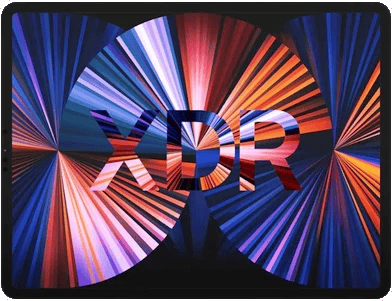 Apple iPad Pro 11" (2021)
|
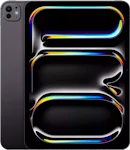 Apple iPad Pro 11" (2025) - Standard Glass Screen - 16GB RAM
|
|
|---|---|---|
| Screen | 11" | 11" |
| Display | Liquid Retina IPS LCD | Ultra Retina Tandem OLED, 120Hz, HDR10, Dolby Vision, 1000 nits (HBM), 1600 nits (peak) |
| Resolution | 1668 x 2388 | 1668 x 2420 |
| Pixels Per Inch | 265 | 267 |
| Rear Camera | 12 Megapixels | 12 Megapixels |
| Front Camera | 12 Megapixels | 12 Megapixels |
| Chipset | Apple M1 | Apple M5 |
| Storage | 128GB, 256GB, 512GB, 1TB, 2TB | 1TB |
| OS | Android | iPadOS |
| SIM Type | Nano SIM | e- SIM |
| Connectivity | Up to 5G | Up to 5G |
| Wi-Fi | 802.11 a/b/g/n/ac/6 | 802.11 a/b/g/n/ac/6e/7 |
| Bluetooth | 5.0, A2DP, LE | 6.0 with A2DP, LE, EDR |
| Dimensions | 247.6 x 178.5 x 5.9 mm | 249.7 x 177.5 x 5.3 mm |
| Weight | 470 grams | 444 grams |
| Water Resistance | - | - |
| Contracts | - |
£165.79/mo
£20.00 upfront |
| SIM-free | - | - |
| Prices updated 14 July 2026 | ||
| Deals | Deals | |
Cheapest Deals
Apple iPad Pro 11" (2025) - Standard Glass Screen - 16GB RAM

£165.79 per month, £20 upfront.
Related Comparisons
Frequently Asked Questions
Which has the better screen, the Apple iPad Pro 11" (2021) or Apple iPad Pro 11" (2025) - Standard Glass Screen - 16GB RAM?
Both phones have a similar screen size at around 11", both screens are similarly sharp at around 265 pixels per inch, and the Apple iPad Pro 11" (2021) uses a Liquid Retina IPS LCD panel while the Apple iPad Pro 11" (2025) - Standard Glass Screen - 16GB RAM has a Ultra Retina Tandem OLED, 120Hz, HDR10, Dolby Vision, 1000 nits (HBM), 1600 nits (peak).
Which has the better camera, the Apple iPad Pro 11" (2021) or Apple iPad Pro 11" (2025) - Standard Glass Screen - 16GB RAM?
The Apple iPad Pro 11" (2021) features a 12 Megapixels rear camera, while the Apple iPad Pro 11" (2025) - Standard Glass Screen - 16GB RAM has a 12 Megapixels rear camera. Both devices also have front-facing cameras for selfies and video calls.
What storage options are available for the Apple iPad Pro 11" (2021) and Apple iPad Pro 11" (2025) - Standard Glass Screen - 16GB RAM?
The Apple iPad Pro 11" (2021) is available in 128GB, 256GB, 512GB, 1TB, 2TB, while the Apple iPad Pro 11" (2025) - Standard Glass Screen - 16GB RAM comes in 1TB.
What processors do the Apple iPad Pro 11" (2021) and Apple iPad Pro 11" (2025) - Standard Glass Screen - 16GB RAM use?
The Apple iPad Pro 11" (2021) is powered by the Apple M1, while the Apple iPad Pro 11" (2025) - Standard Glass Screen - 16GB RAM uses the Apple M5.
Which is easier to carry and hold, the Apple iPad Pro 11" (2021) or Apple iPad Pro 11" (2025) - Standard Glass Screen - 16GB RAM?
It's a trade-off: the Apple iPad Pro 11" (2025) - Standard Glass Screen - 16GB RAM is lighter but the Apple iPad Pro 11" (2021) is more compact. It's 26g lighter at 444 grams, though the Apple iPad Pro 11" (2021) is actually the more compact phone at 247.6 x 178.5 x 5.9 mm, the Apple iPad Pro 11" (2025) - Standard Glass Screen - 16GB RAM is slimmer at 5.3mm thick.
What operating system do the Apple iPad Pro 11" (2021) and Apple iPad Pro 11" (2025) - Standard Glass Screen - 16GB RAM run?
The Apple iPad Pro 11" (2021) runs Android and the Apple iPad Pro 11" (2025) - Standard Glass Screen - 16GB RAM runs iPadOS. This is one of the biggest factors when choosing between the two, as each ecosystem has its own apps, services and features.